
Art World
Sydney Is Paying Artists to Keep Living There
Forty artists will receive AU$25,000 each through Sydney’s new support fund. Living expenses and creative time are eligible costs—a small but significant shift in what a city chooses to fund.
Studio rent is an art expense. So is the time in which someone can afford to make work. Sydney’s new artist support fund puts both inside a public grant, alongside materials, professional development and ordinary living costs.
The City of Sydney announced on 18 November 2026 that forty artists will receive AU$25,000 each, a total of AU$1 million. The council approved the recommendations on 16 November. The decision supports people continuing to practise in the city, rather than attaching every dollar to a single public exhibition or performance.
Funding the person who makes the work
The programme offers a fixed amount for one year. Its guidance explicitly includes dedicated creative time among the possible uses. That matters because an artwork’s costs begin before there is something to display: testing an idea, learning a process and revising unsuccessful attempts all require time.
Recognising those costs changes the question a grant asks. Instead of concentrating only on what audiences will receive, it also asks what an artist needs to remain able to work. Our reading is that this is the programme’s most useful proposition, even for readers who will never apply for a grant in Australia.
It is not a universal artist salary. Eligibility includes professional practice, residence in Greater Sydney and a connection to the City of Sydney’s local cultural network. The fund supports selected applicants from priority communities; the current application round is closed.
Forty grants, 321 applications
The council’s published data report records 321 applications to the artist support fund and forty recommendations for funding. That is about one in eight applicants. The document makes the scale of the intervention visible alongside its limits: the allocation can materially help recipients while leaving many applicants without support from this fund.
Those figures should not be mistaken for a measure of artistic quality. They describe the outcome of a particular funding round with a fixed budget and assessment criteria. A selection process cannot tell us how much work a city loses when people outside it can no longer afford to stay.
A grant cannot replace a place to work
The city’s wider creative grants programme separates support into three categories: creative projects, individual artists and cultural infrastructure. It also lists accommodation, live-and-work spaces and short-term empty properties among its other forms of assistance.
That structure acknowledges different needs. Money for an artist and access to a suitable room can help each other, but neither automatically produces the other. A one-year award cannot on its own guarantee an affordable studio when the funding ends.
The next artist support application round is listed for July 2027, with funding generally available from January. For now, the concrete development is the approval of this allocation. Whether it helps artists remain in Sydney will require evidence over time; the intention and the outcome are not yet the same thing.
Sources
- City of Sydney: announcement, 18 November 2026
- Council: approved creative grants decision, 16 November 2026
- Artist support: uses, eligibility, duration and application status
- Council Attachment I: applications and funding recommendations (PDF)
- Creative grants: funding categories and support for spaces
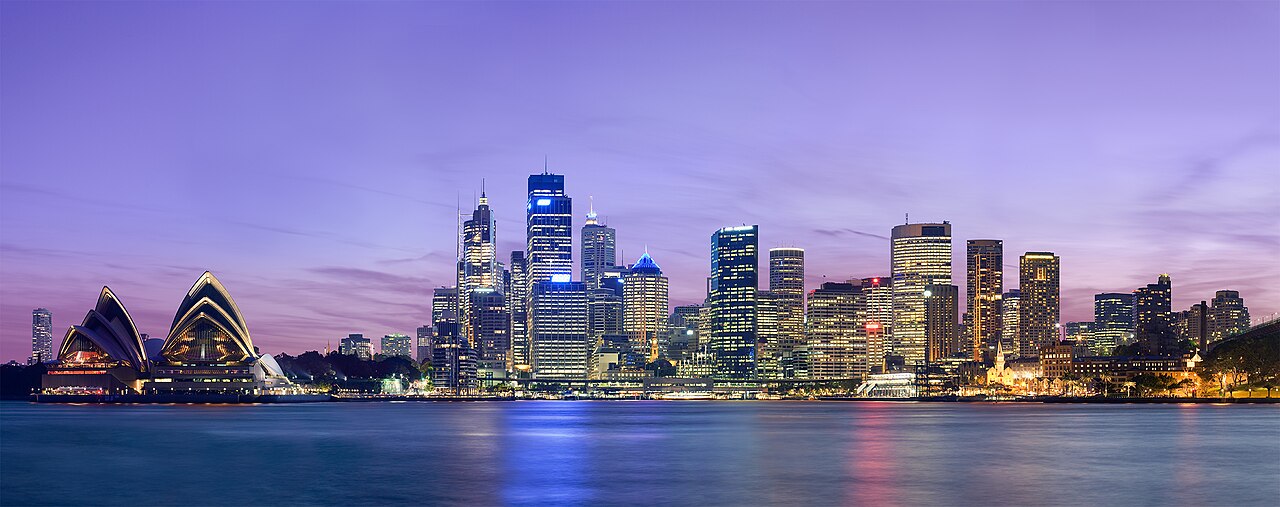
Image credit: Photo by DAVID ILIFF, Sydney skyline at dusk – Dec 2008, 3 December 2008, via Wikimedia Commons. Licence: CC BY-SA 3.0. Exposure-blended archival city photograph, not an image of grant recipients. Reduced in size; preview crops and other image adaptations remain under CC BY-SA 3.0.

