
Art World
What a Necklace Can Do to a Body
Opening in Shanghai on 18 November, Jewelry: The Body Transformed brings 192 works and sets from The Met into conversation with Chinese treasures. The story is as much about power and belonging as precious materials.
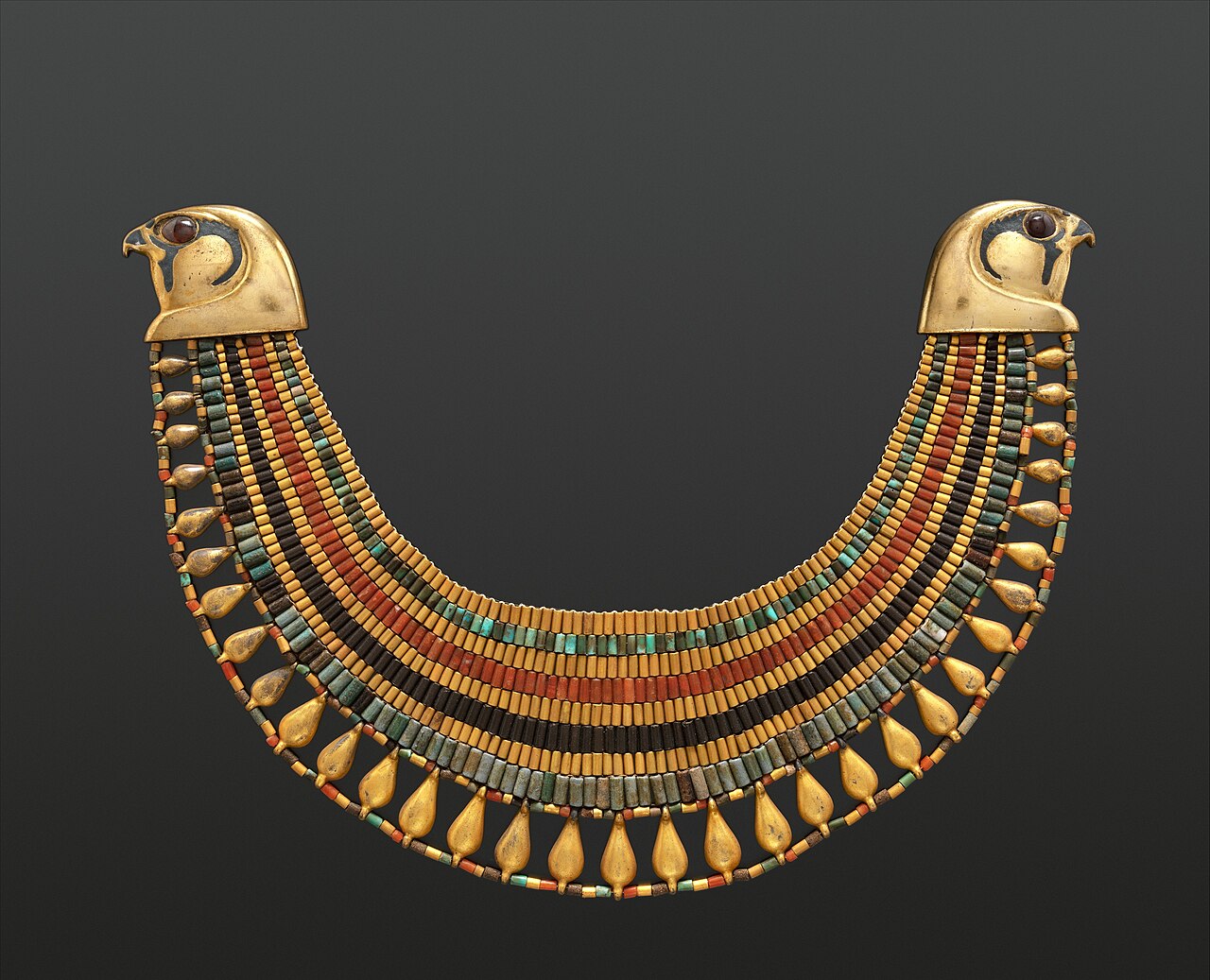
Take a necklace off its wearer and something disappears with the body: the way it moves, the place it claims, the message it sends. Jewelry: The Body Transformed, Treasures from The Metropolitan Museum of Art, opening at Shanghai Museum East on 18 November 2026, makes that relationship its starting point.
The Shanghai Museum lists 192 works and sets from The Met alongside more than twenty Chinese treasures from its own collection. The exhibition runs until 5 May 2027. Its premise invites a shift in attention: from the value of a material to what an object allows a person to communicate.
A collar is also a frame
Among the museum’s announced highlights is the broad collar of Senebtisi, an Egyptian work dated by The Met to about 1850–1775 BC. Faience, gold, carnelian and turquoise form an object with an outside diameter of just 25 centimetres. Its catalogue records restoration, too: falcon heads and leaf pendants originally made from gilded plaster were restored in gilded silver.
The collar’s scale is a useful corrective to the idea that an artwork needs a wall, a pedestal or a large room. It was conceived in relation to the neck and chest. Even in a photograph, its opening asks the viewer to imagine the absent person. Knowing that parts were restored also complicates the apparently continuous surface of an ancient treasure.
Who gets to wear authority?
The exhibition’s earlier New York iteration, held in 2018–19, organised its enquiry around bodies that were divine, regal, transcendent, alluring or resplendent. Its section on royal adornment examined how materials, workmanship and imagery separate a ruler from a court, and a court from everyone else. The body becomes a place where hierarchy can be made visible.
That framework provides historical context rather than a checklist for Shanghai: the two editions have different object totals. Reading a jewel only as a beautiful small sculpture leaves out the social situation that gave it force. A viewer can ask who had access to its materials, who recognised its symbols and whose attention it was intended to command.
An exchange with a longer history
The opening follows a collaboration agreement signed on 16 November by Met director and CEO Max Hollein and Shanghai Museum director Chu Xiaobo. Their memorandum covers exhibitions, research and curatorial exchange. The Met traces the institutions’ exhibition relationship to 1980, when Shanghai participated in The Great Bronze Age of China.
Against that institutional backdrop, the new show offers an intimate point of entry. Clothing and jewellery are familiar ways of presenting ourselves before we speak. Looking closely at these objects can make a remote history feel legible, while reminding us that the meanings of adornment depend on the people, beliefs and systems around it.
Sources
- Shanghai Museum: exhibition dates, loans and highlights
- The Met: broad collar of Senebtisi, object 08.200.30
- The Met: 2018–19 exhibition overview
- The Met: The Regal Body, historical interpretation
- The Met: collaboration agreement, 16 November 2026
Image credit: The Metropolitan Museum of Art, New York, Broad collar of Senebtisi, ca. 1850–1775 BC, Rogers Fund, 1908 (08.200.30). Archival collection image via Wikimedia Commons; original museum record. CC0 1.0 / public domain. Not an installation view. Resized; preview may be cropped.

