
Artists
The Filmmaker Who Lets the Boatmen Describe the Colour of the Sea
Jonathas de Andrade has won the 2026 Eye Art & Film Prize. His recent Raftsmen and Canoeists offers a precise way into a practice that treats people’s knowledge as part of how an artwork is made.
In Raftsmen and Canoeists, men describe the sea through its shifting colours. Greens and blues become ways of reading currents, depth and time. The detail, recorded in the International Film Festival Rotterdam’s account of Jonathas de Andrade’s 2026 film, turns colour into knowledge acquired through work.
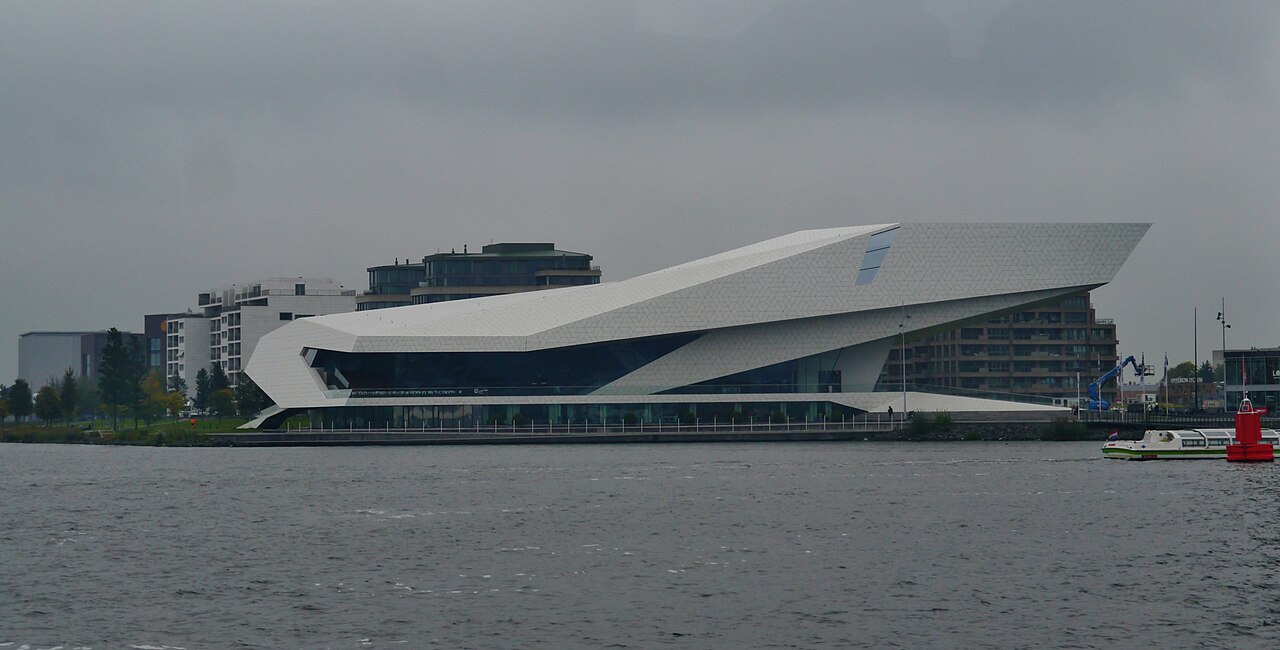
De Andrade was announced as the twelfth winner of the Eye Art & Film Prize in Amsterdam on 19 November 2026. The award brings €30,000 to support new work and a presentation at Eye Filmmuseum. The jury emphasised his relationship with communities in north-eastern Brazil and the role participants play in shaping his films.
Work that teaches someone how to see
The thirteen-minute Raftsmen and Canoeists follows raft navigators on the coast of Maceió and canoeists on the São Francisco River in Alagoas. IFFR describes conversations, collective labour and a percussion soundtrack, connecting the film’s colours with Brazilian geometric abstraction and Neo-Concrete art.
That connection invites a different way of looking at an abstract shape or a patch of colour. A blue can be an aesthetic choice and a sign someone has learned to interpret. The distinction matters because expertise often becomes invisible when a person appears in an artwork chiefly as a representative of a place or occupation.
A boat does not move through water because its colour is beautiful. People read conditions, coordinate gestures and make decisions. A film can attend to those activities without reducing them to explanations supplied by someone outside the work.
Who helps decide the image?
Born in Maceió in 1982 and based in Recife, de Andrade works across photography, film and installation. Eye’s announcement describes a practice combining documentary situations with fiction and performance. ArtReview’s report likewise stresses that collaborators influence the result.
Collaboration is not an automatic guarantee of equal power. A filmmaker still makes choices about framing, editing and where a work is shown. But asking what participants contribute beyond their appearance is a useful starting point. Their words, practical knowledge and proposals can affect the structure of a film as well as its subject.
It also makes a familiar division less secure. Documentary is often expected to deliver facts; fiction is allowed to invent. A work built from shared propositions may use both, and a viewer needs to attend to how a situation has been constructed rather than assuming the camera simply found it.
A prize for a way of working
The award’s significance lies partly in the production opportunity it creates. Money for new work and an institutional presentation can give a method time and space to develop. They do not tell us in advance what the next film will be.
Raftsmen and Canoeists provides a concrete point of entry into the artist’s practice now. Its boatmen offer more than an image of labour: their descriptions suggest that a landscape can look different when someone who knows it helps determine what we notice.
Sources
- Eye Filmmuseum: official announcement, 19 November 2026 (PDF)
- IFFR: Eva Langerak’s film account and technical details, 2026
- ArtReview: award report, 20 November 2026
Image credit: Zairon, 25 September 2017, via Wikimedia Commons, CC BY-SA 4.0. Archival exterior of Eye Filmmuseum, the awarding institution; not a film still, artist portrait or photograph of the award ceremony. Reduced in size; previews may be cropped. Image adaptations remain under CC BY-SA 4.0.

