
Art World
Detroit Puts Its Own Artists in Every Room
The Detroit Institute of Arts has reopened its Modern and Contemporary galleries. A young woman holding a phone and local artists throughout the display change where its story begins.
A young Black woman holds a mobile phone and looks into the distance. Cast in bronze on a monumental scale, she is the first figure visitors are due to encounter in the Detroit Institute of Arts’ reinstalled Contemporary galleries. Thomas J. Price’s A Place Beyond, made in 2025, gives an ordinary moment the attention often reserved for a historical figure.
The Modern and Contemporary galleries reopened on 15 November, after their first comprehensive reinstallation in nearly twenty years. The contemporary section brings together more than 120 works from the 1950s to the present across ten themed rooms. Artists connected to Detroit appear in every one of them. The choice gives a city better known internationally for cars and music a recurring place in the museum’s account of recent art.
Who gets to set the terms?
Curator Katie Pfohl describes a selection process that began with more than 2,000 objects and gradually narrowed. In an interview published by the museum on 12 November, she explains that the rooms are organised around subjects such as love and loss, labour, and democracy. These themes give visitors a way to connect the works to experiences they might know before learning the art-historical terminology.
One pairing brings Eva Hesse’s Accession II into conversation with a work by Detroit artist Lester Johnson Jr. in a room about labour and bodies. Elsewhere, Tiff Massey’s Baby Bling joins the collection’s display. The museum commissioned and subsequently acquired the sculpture. Local artists therefore enter the presentation through several routes, from established holdings to recent purchases.
The Modern galleries extend the connection to Michigan through a room devoted to midcentury design, including Ray and Charles Eames and Alexander Girard. Paintings sit within a broader selection of sculpture, glass, ceramics, furniture and film. The museum’s director points to Gabriele Münter’s Kochel, Snowy Landscape with Houses among the recent acquisitions entering the display.
The collection changes through choices
According to Pfohl, more than half the contemporary works were made after 2000, and nearly forty percent are being shown at the DIA for the first time. She also describes a substantial increase in the representation of women and artists of colour. Those figures reflect decisions about acquisitions and what comes out of storage. The objects a museum owns and the story a visitor encounters are related through the act of selection.
For visitors, the most revealing test will be the route between rooms. Can a sculpture by a local artist change how a familiar international name reads nearby? The new display creates repeated opportunities to ask that question. Detroit’s artists take part throughout the building’s account of contemporary life, while Price’s figure sets an accessible starting point at the entrance.
Sources
- DIA. Reimagine Contemporary Art and reopening date
- DIA. Director Salvador Salort-Pons on the collection’s new presentation
- DIA. Interview with curator Katie Pfohl, 12 November 2026
- DIA. Reimagine Modern Art and selected works
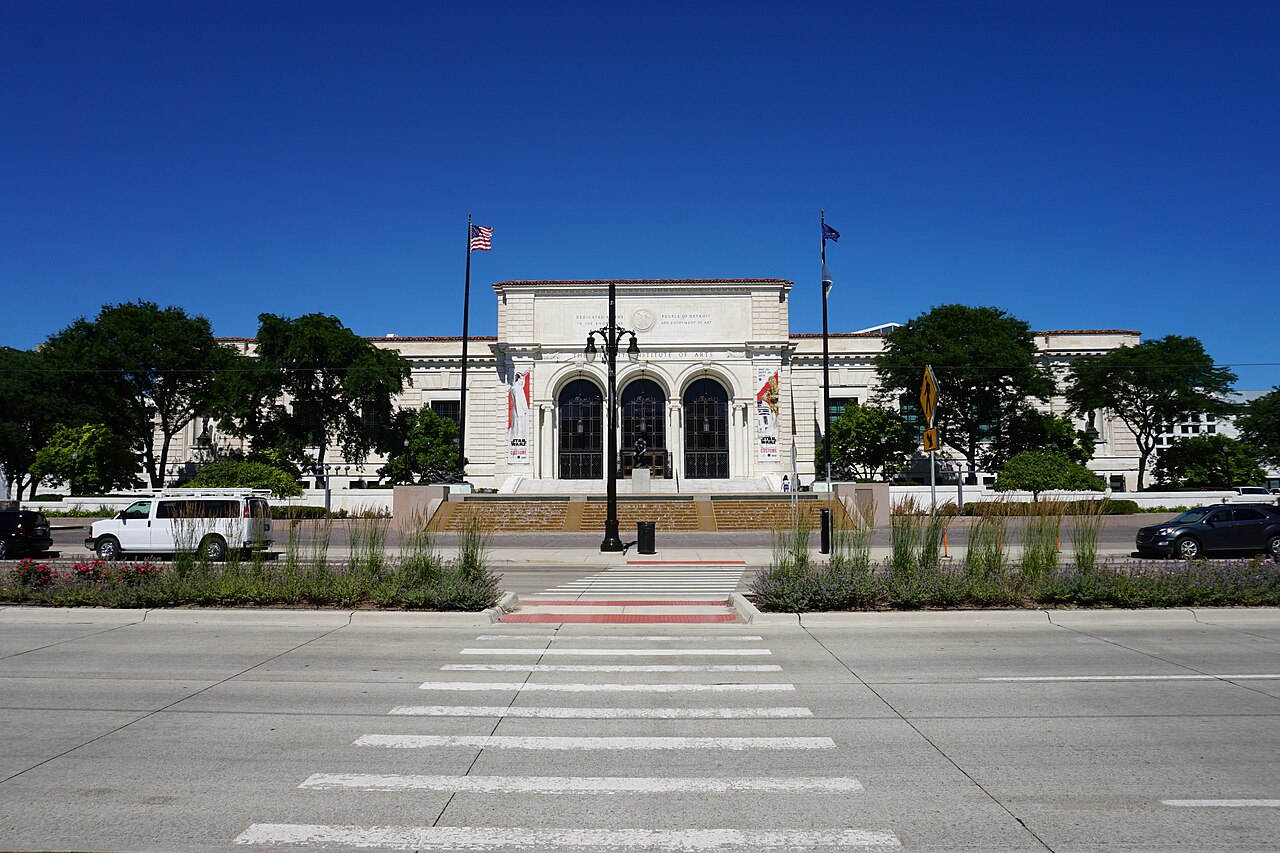
Cover image Detroit Institute of Arts, 2018. Archive photograph by Michael Barera via Wikimedia Commons. CC BY-SA 4.0. Cropped versions are shared under the same licence.

